Aig-Imoukhuede: Africa Must Turn Financial Stability Into Shared Prosperity
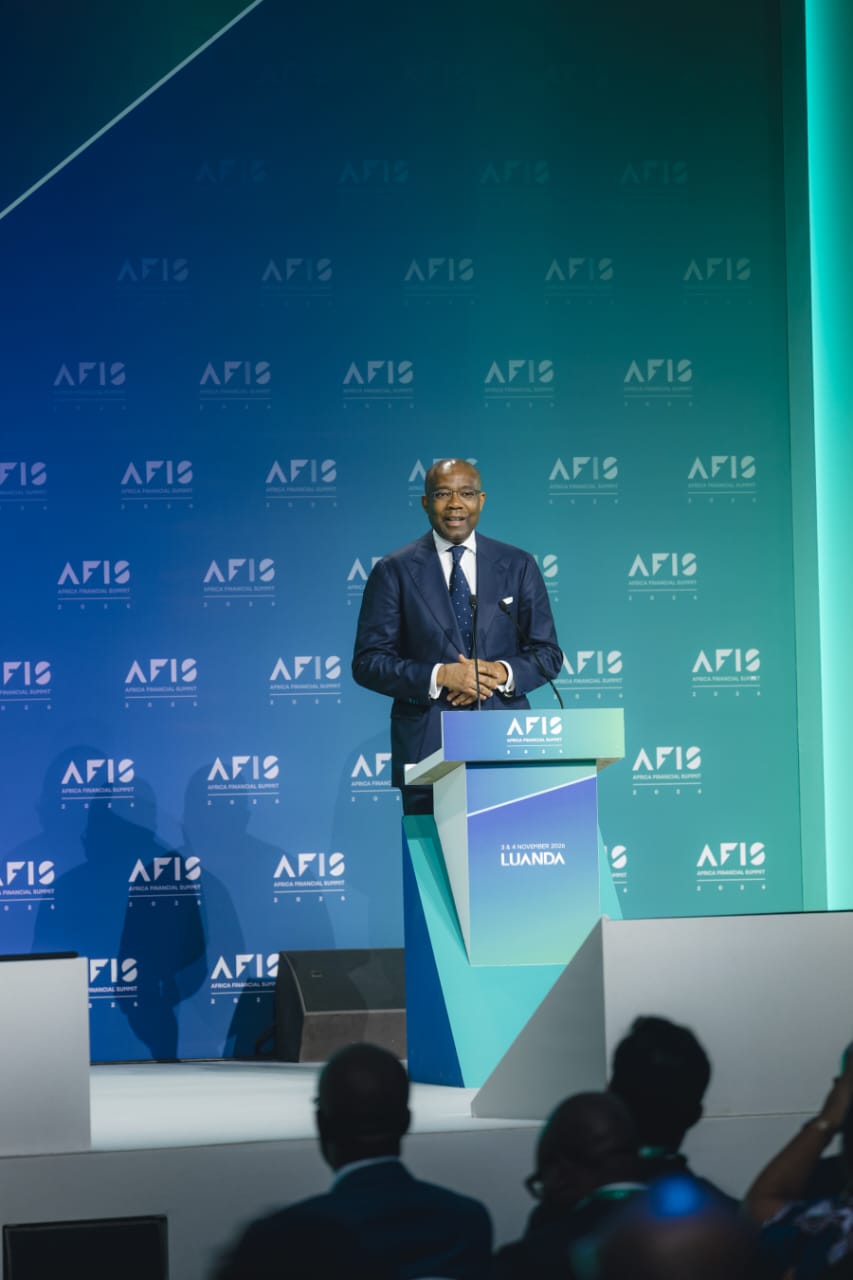
Chairman of Access Holdings Plc, Aigboje Aig-Imoukhuede, has challenged African central banks, financial institutions and policymakers to move beyond preserving stability and make capital work for productivity, growth and shared prosperity.
Speaking at the closing session of the Africa Financial Summit (AFIS) 2026 in Luanda, he said Africa’s next phase of development will depend less on the volume of capital available and more on how effectively it is mobilised and deployed.
“The real question is: Are we making the capital we have count?” he asked.
Reflecting the summit theme, Making Capital Count: Unlocking Growth Through African Finance, he acknowledged central banks’ progress on monetary stability, supervision and resilience, but warned that stability alone is not enough.
“A banking system can be as safe as you want it to be, it can be profitable, but then it can still serve an economy that is very underperforming,” he said.
Success, he argued, must now be measured not only by inflation, stability and profitability, but by contribution to lifting people out of poverty and expanding opportunity.
Unlocking capital trapped in SMEs
Aig-Imoukhuede called for releasing liquidity trapped in commercial transactions involving small and medium-sized enterprises. Millions of African businesses create value but struggle to access working capital to sustain and expand operations.
“When an SME supplies goods to a creditworthy buyer, that SME should be able to attract capital and financing at the same cost of the credit rating of that buyer immediately,” he said.
Citing digital invoicing systems in India and Brazil, he challenged African regulators and financial institutions to build similar infrastructure to improve access to finance, strengthen supply-chain liquidity and unlock productive capacity.
He also called for greater mobilisation of long-term domestic savings into infrastructure and the real sector.
“We can’t use bank deposits, which can be withdrawn tomorrow, to finance long-term projects which require 20-year money,” he said.
Citing the Dangote Refinery as evidence of investor appetite, he urged Africa to connect household savings, pension assets and institutional capital to long-term opportunities. He warned that excessive government borrowing could crowd out the private sector and called for stronger coordination between monetary and fiscal authorities.
He suggested future AFIS discussions should bring finance and budget ministers together with central bank governors to address structural barriers to productive investment.
Scale must become competitiveness
Turning to banking, Aig-Imoukhuede said African institutions must ensure their growing continental presence delivers economic value. Replacing foreign ownership with African ownership, he cautioned, is not in itself sufficient progress.
“We must translate the scale we are building into globally competitive value,” he said.
African banks, he argued, need the international reach, clearing capabilities and payment infrastructure to serve businesses as effectively as the multinationals they are replacing.
Using Access Bank’s operations in Angola as an example, he said: “We haven’t come to Angola to serve you simply as a strong domestic Angolan bank, we want to serve you as a stronger and better international bank than those who have left.”
Drawing comparisons with the evolution of Asian banks, particularly in China, he said Africa’s institutions must connect domestic economies to international markets while supporting deeper regional integration.
Integration before monetary union
Aig-Imoukhuede called for faster economic and financial integration, warning that fragmented markets constrain capital mobilisation and growth. He cautioned against letting debate on a common African currency overshadow the more immediate task of integrating markets, financial infrastructure and the movement of goods, services and people.
“Integration must precede monetary union,” he said.
He recounted how his chief of staff could not accompany him to Angola because of visa difficulties, questioning how Africa could build integrated financial markets while restricting the movement of people conducting legitimate business.
Meaningful integration, he said, requires interoperable financial systems, improved cross-border payments, deeper capital markets and greater macroeconomic convergence. He outlined three priorities: building interoperable financial infrastructure, developing integrated African financial markets, and pursuing macroeconomic convergence.
Beyond technical reforms, he said integration demands genuine commitment from African leaders to a more connected and prosperous continent.
Making capital count
Looking ahead 10 to 20 years, he asked whether African businesses would raise capital more efficiently across borders, whether pension funds would finance infrastructure rather than concentrate on government securities,m and whether financial institutions would translate the continent’s resources into broader prosperity.
“Will we make capital count?” he asked.
He expressed confidence that collaboration among governments, regulators, financial institutions and private-sector leaders would advance Africa’s development.
For Access Holdings, his message reinforces the need to translate the Group’s expanding African footprint into sustainable economic value through stronger connectivity, productivity and solutions that enable businesses and communities to grow.
Ultimately, he said, success will not be measured by how much capital Africa attracts, how stable its banks become, or how far its institutions expand — but by how effectively it converts financial resources into productive enterprise, integrated markets and lasting shared prosperity.
About The Author