Network. Network. Network Problem Everywhere.
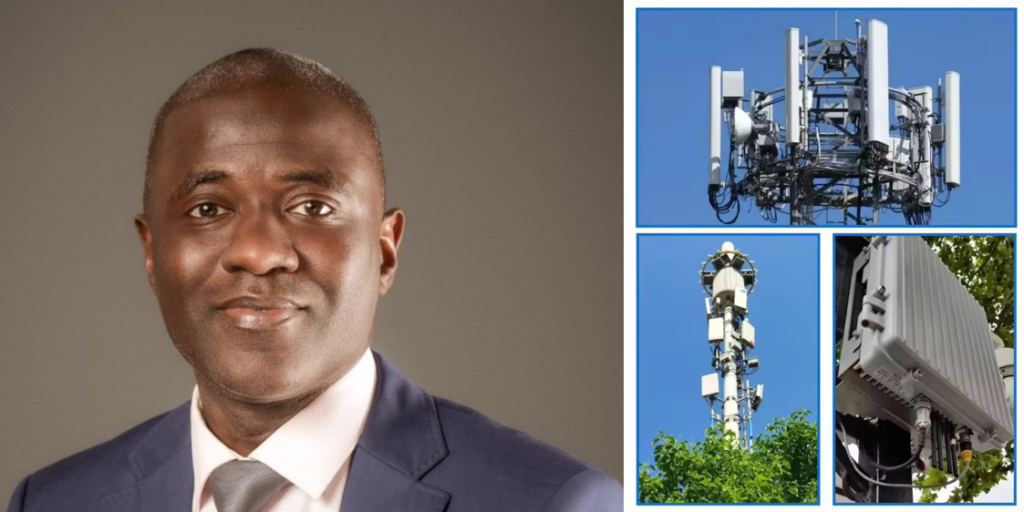
By Godson Ikoro
At 3:47 p.m. last Tuesday in Satellite Town, Jennifer Okafor watched her POS machine flash: transaction failed, no Network for the fifth time. The queue of traders behind her dissolved into muttered complaints. A generator roared in the background, but it could not power a signal that people so much desired.
Across the city in Lekki, 29-year-old software engineer Abdullahi Musa, froze mid-sentence on a Zoom call with a candidate recruiter.“Your network is unstable,” came the apologetic reply before the screen went black. The job prospect was dashed.
In Kano the same hour, a resident doctor at Aminu Kano Teaching Hospital abandoned an attempt to upload a patient’s CT scan to a consultant in Abuja. Reason: Upload failed.
Similarly, the result of the eco test for Mr Abayomi Dare, could not be transmitted to the consultant at Owerri Federal Medical Centre (FMC) because there was no network for over eight hours. And the problem persisted across supermarkets, hotels, gas stations, CBT centres and anywhere where a fund transfer is being made across sectors of the economy. No Network became the refrain chorused by all and sundries.
Across cities, one national ailment: the network challenge in the marketplace.
In technical Infrastructure , a network challenge is a bottleneck or failure point that prevents a system from delivering data reliably and at scale.
REASONS WHY DROPPED CALL PERSISTS
Arguably, Nigeria’s telecommunications sector has grown to over 220 million active subscriptions, yet the lived experience of users is often defined by latency, congestion, and outright outages. Industry engineers point to a mix of familiar culprits.
According to them, the first is the last-mile problem.
Submarine cables land in Lagos with terabytes of capacity, but the final connection to homes and shops often relies on aging copper, microwave links, or nothing at all. Data arrives at the shore through a fire hose, then squeezes into a straw. This is unlike a call to the United States of America, where one dial the wrings at the other end in less than a second.
The Second is tower congestion.
Revolnews Online gathered that single 4G base station is designed to serve roughly 2,000 subscribers. But in dense districts of Lagos, Kano and Onitsha, one tower routinely carries 20,000. The result is jitter, packet loss, and the robotic voice that has ended countless business calls. Seizures of voices in the middle of an important calls and outright no connection.
Third is power. About 60 percent of base stations nationwide depend on diesel generators. With pump prices above ₦1,400 per litre and supply erratic, towers go dark. When the tower sleeps, commerce sleeps with it.
Fourth is fibre cuts. The Nigerian Communications Commission recorded over 40,000 incidents last year. Road construction crews, vandals, and uncoordinated digging severed the very cables that carry banking transactions, emergency calls, and exam results. Each cut averages six hours to repair.
Finally, there is policy friction; Right-of-Way charges for laying fibre vary wildly across 36 states. The cost of one kilometre can be ₦145,000 in Lagos and ₦850,000 elsewhere. Faced with that calculus, operators simply do not build. And so no noticeable progress.
THE COST OF SILENCE
The consequences are measurable. The World Bank estimates that a 10 percent increase in broadband penetration can raise GDP growth by 1.4 percent in developing economies. Conversely, every hour of downtime drains millions from POS operators, e-commerce vendors, hospitals, and schools. SIM swap fraud and DDoS attacks compound the problem, turning weak networks into national security gaps.
WHAT THE NATION EXPECTS FROM NCC
As the Nigerian Communications Commission is the sector’s physician, several treatments are overdue, experts say.
First, NCC should designate fibre optic infrastructure as Critical National Infrastructure. Today, cutting a cable attracts a fine comparable to a traffic offence. Making it a serious crime with expedited prosecution would deter vandals and careless contractors.
Second, NCC should harmonize Right-of-Way fees. A single national rate, enforced across all states, would unlock an estimated 90,000 km of new metro fibre within 24 months. The NCC must move from persuasion to policy.
Third : NCC should shift from punitive fines to public Quality-of-Service dashboards. Publishing tower-by-tower uptime data would make network quality a boardroom metric, not a regulatory afterthought.
Fourth: It should mandate infrastructure sharing. Nigeria does not need four separate towers on one street, each burning diesel. Compulsory sharing would cut operating costs by up to 40 percent and accelerate rural coverage.
Fifth: NCC should tie new spectrum releases to rural rollout obligations. Operators seeking 5G and 6GHz bands should first demonstrate a defined number of new rural sites.
THE FG’S ROLE
The federal and state governments, however, cannot outsource the cure. Power remains the bedrock. A base station without electricity is a monument, not a utility. Protecting towers and transmission lines must rank with pipeline security.
States must also rethink taxation. Annual levies of ₦2 million per base station are self-defeating when residents then petition about poor service. The fastest way to improve coverage is to stop taxing it into scarcity. Expectedly, the new tax Act will take care of that.
Further more, a security, a national Computer Emergency Response Team dedicated to telecoms could enable real-time threat intelligence sharing. SIM registration, if properly audited, would curb the SIM swap fraud that drains bank accounts weekly.
Digital literacy and local data hosting are the final pillars. Too much Lagos-to-Lagos traffic still routes through London, adding latency and cost. Building in-country data centers and teaching users the difference between “no network” and “no data” will trim complaints and improve resilience.
THE SIGNAL AHEAD
The goal is not abstract. It is Jennifer’s POS printing a receipt in two seconds. It is Abdullahi completing a job interview without apology. It is a Kano doctor sending a scan before the patient is settled in bed.
None of this requires new technology. It requires coordinated policy, political will, and the recognition that in a digital economy, the network is as vital as roads and bridges.
Until that is done, the dial continues sine die.
About The Author